10 Signs Your Library Still Needs Digital Transformation in 2026
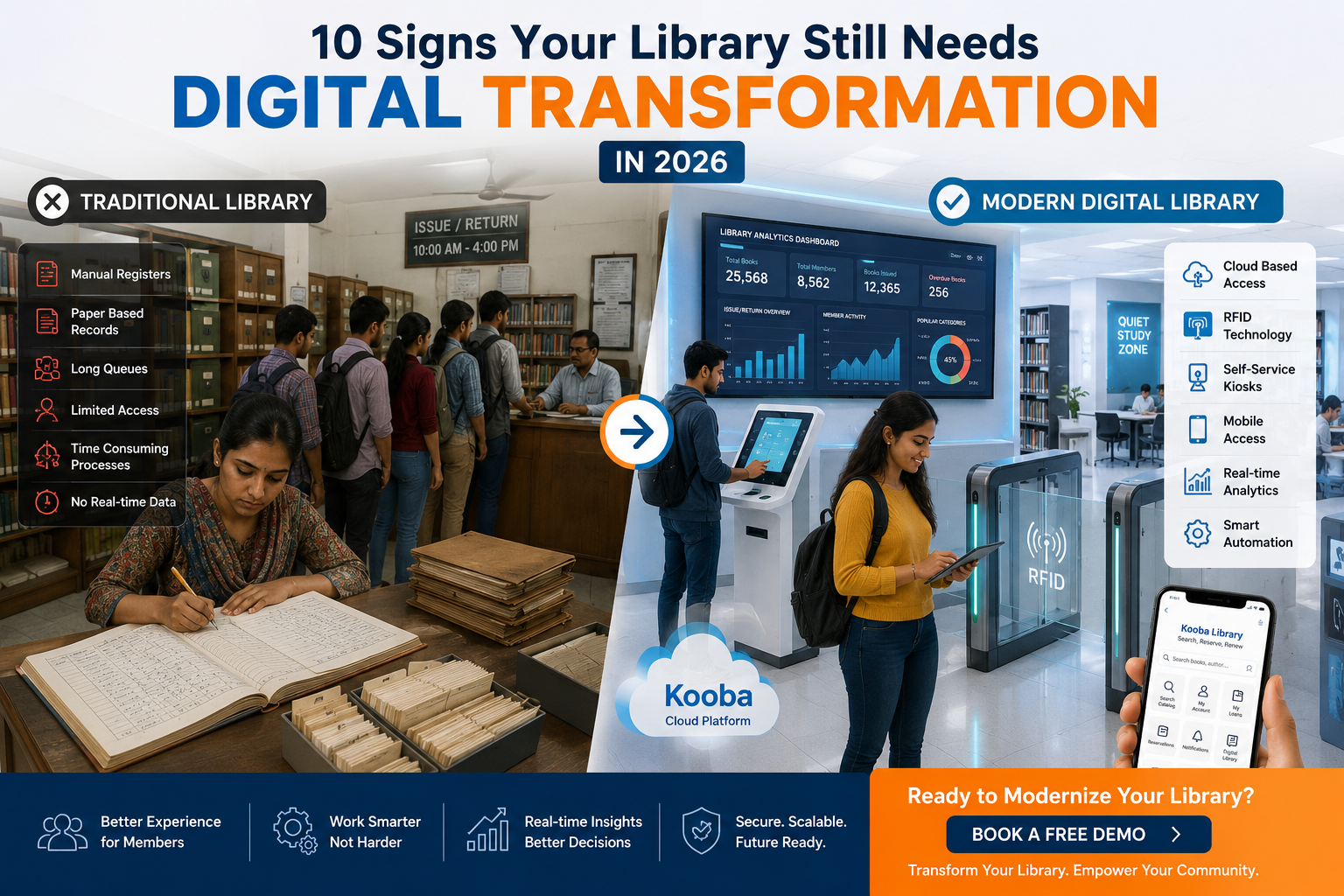
Libraries have evolved from traditional book repositories into digital knowledge centers that support learning, research, collaboration, and community engagement. Yet many libraries still rely on manual processes, paper-based systems, and outdated software that limit efficiency and user satisfaction.
If your library is facing increasing operational challenges, it may be time to embrace digital transformation.
Here are ten signs your library needs modernization in 2026.
1. You Still Use Manual Registers
If book issues, returns, and member records are maintained in physical registers, your staff spends valuable time on repetitive administrative tasks.
Digital systems automate circulation and reduce errors.
2. Members Struggle to Find Books
Modern users expect quick search experiences similar to Google.
Without an online catalog or OPAC, members may struggle to locate resources efficiently.
3. Reporting Takes Hours or Days
Generating circulation statistics, member activity reports, and inventory summaries should take seconds, not hours.
A modern library management system provides real-time analytics and reporting.
4. You Cannot Access Library Data Remotely
Cloud-based systems allow librarians and administrators to access information from anywhere.
If you must be physically present to manage operations, your technology may be outdated.
5. Overdue Books Are Increasing
Manual reminder processes often result in delayed returns.
Automated notifications improve compliance and reduce overdue materials.
6. Inventory Verification Is Time-Consuming
Annual stock verification should not require weeks of effort.
Barcode and RFID technology can dramatically reduce inventory management time.
7. Members Cannot Access Services Through Mobile Devices
Today's students and readers expect mobile-friendly services, including book searches, reservations, and notifications.
8. You Operate Multiple Branches but Lack Centralized Control
Multi-branch libraries require unified administration and reporting.
Cloud-based systems simplify centralized management.
9. Staff Spend Too Much Time on Routine Tasks
Library professionals should focus on helping patrons, not processing paperwork.
Automation reduces repetitive work and improves productivity.
10. Your Library Has No Data-Driven Decision Making
Without analytics, collection development and resource allocation become guesswork.
Modern software provides insights into usage patterns, popular titles, and member engagement.
Benefits of Digital Transformation
A digitally transformed library can:
- Improve member satisfaction
- Reduce administrative workload
- Enhance reporting capabilities
- Support mobile access
- Strengthen security and tracking
- Enable better decision making
How Kooba Helps Libraries Modernize
Kooba Library Management Software supports:
- Catalog Management
- Member Management
- Circulation Automation
- Barcode & RFID Integration
- Cloud Access
- Analytics & Reporting
- Mobile-Friendly Access
- Multi-Branch Management
Whether you manage a school, college, university, public, or corporate library, Kooba provides the tools needed to build a future-ready library.
Conclusion
Digital transformation is no longer optional for modern libraries. Institutions that embrace technology can improve efficiency, reduce costs, and deliver better services to their communities.
If your library exhibits several of the signs discussed above, now is the ideal time to begin your digital transformation journey.